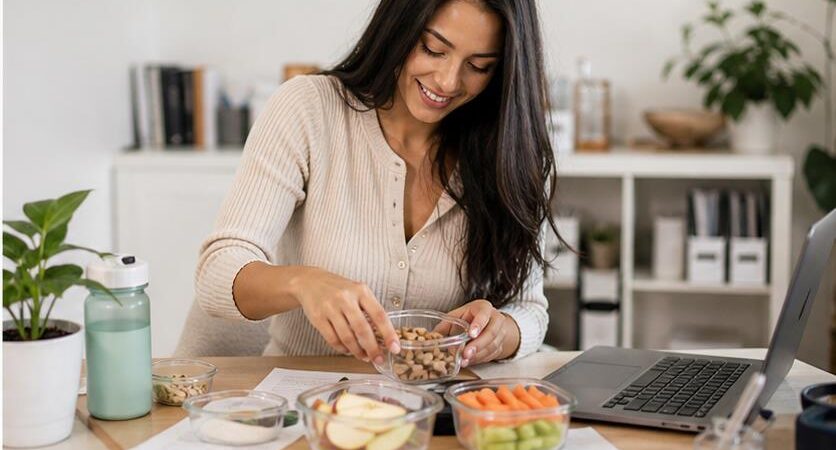
Choosing snacks for insulin resistance is less about finding one perfect food and more about building better combinations. A snack that contains only fast-digesting carbohydrates may leave you hungry or tired soon after. A snack that combines protein, fiber, and healthy fats tends to be more satisfying and can support steadier energy during a long workday.
This article is educational and does not replace medical nutrition advice. If you have diabetes, take glucose-lowering medication, use insulin, are pregnant, or have been given a specific meal plan, follow your clinician’s guidance. Still, the basic snack structure below can help many people think more clearly about work snacks and avoid relying on vending machines, pastries, or sweet drinks when the afternoon gets busy.
The Snack Formula
A good work snack for insulin resistance usually has three parts. First, include protein such as Greek yogurt, cottage cheese, turkey slices, tuna, eggs, edamame, tofu, or a protein-rich dip. Second, include fiber from vegetables, berries, apples, beans, lentils, chia seeds, or whole grains. Third, include a modest amount of healthy fat from nuts, seeds, avocado, olive oil, or nut butter.
The portion does not need to be large. The goal is to bridge the gap between meals without turning the snack into a second lunch. For many people, a planned snack is actually better than waiting until hunger becomes urgent. When hunger is extreme, it becomes harder to choose calmly.
Easy Work Snack Ideas
Greek yogurt with berries and chia seeds is a strong option because it is quick and high in protein. Apple slices with peanut butter can work well when the peanut butter is measured. Carrots, cucumber, and bell pepper with hummus bring crunch and fiber. Cottage cheese with tomatoes and black pepper feels more savory and can be surprisingly filling.
Other practical ideas include turkey roll-ups with cucumber, boiled eggs with berries, roasted chickpeas with a cheese stick, edamame with sea salt, tuna on whole-grain crackers, or a small snack box with nuts, vegetables, and a protein source. If you prefer something sweet, try chia pudding made with unsweetened milk and berries, or a protein smoothie that is not overloaded with juice.
What to Keep at Your Desk
Desk-friendly foods can save you when the day gets unpredictable. Keep single-serve nut packs, roasted chickpeas, tuna packets, seed crackers, low-sugar protein bars, herbal tea, and a reusable water bottle nearby. If you have access to a refrigerator, add Greek yogurt, cottage cheese, hummus, cheese sticks, boiled eggs, vegetables, berries, and pre-packed snack boxes.
The best system is boring in a good way. Choose two refrigerator snacks and two shelf-stable snacks that you know you like. Restock them weekly. Decision fatigue is one of the biggest reasons healthy plans fall apart at work, so reducing decisions is a real strategy.
Snacks to Be Careful With
Foods marketed as healthy can still be easy to overeat or may not keep you full. Granola bars, dried fruit, flavored yogurts, sweet coffee drinks, rice cakes, fruit juice, and large smoothies can fit some diets, but they often need pairing or portion control. A banana alone may not satisfy you for long; a banana with Greek yogurt or peanut butter is usually a stronger choice.
Protein bars vary widely. Some are closer to candy bars, while others are genuinely useful. Look for a balance of protein and fiber with moderate added sugar. If a bar triggers cravings or does not keep you full, it may not be the right tool for you even if the label looks impressive.
How to Build a Snack Box
A simple snack box can include one protein, one crunchy vegetable, one fruit, and one fat source. For example, try cottage cheese, cucumber slices, strawberries, and walnuts. Another version could be hummus, carrots, apple slices, and pumpkin seeds. A more savory version could include turkey slices, cherry tomatoes, seed crackers, and avocado.
Prepping snack boxes once or twice a week can reduce impulse choices. Clear containers help because you can see what is ready. If you commute, use a small insulated bag. If you work from home, put the snack box at eye level in the refrigerator so it becomes the easy option.
Final Practical Tips
Pay attention to how you feel after different snacks. Energy, hunger, cravings, digestion, and focus all matter. If a snack makes you sleepy or hungry again quickly, adjust it. If a snack keeps you calm until the next meal, keep it in your rotation. Insulin resistance nutrition does not have to be complicated, but it does reward planning.
A steady work snack strategy can also support weight management, fewer cravings, and better meal choices later in the day. The real win is not perfection. It is having better options available before the stressful moment arrives.
Related Check Nourish Guides
- High Protein Yogurt Bowl for Weight Loss: A Filling Breakfast Guide
- Anti-Inflammatory Meal Prep for Busy Women: A 5-Day Lunch Plan
- High Protein Lunch Ideas for Weight Loss: Easy Work Meals for Women
- Magnesium Glycinate vs Citrate for Sleep: Which Is Better for Women?
- Best Snacks for Diabetics at Night: Blood Sugar-Friendly Choices Before Bed
- Collagen vs Whey Protein for Women: Which Supplement Fits Your Goal?