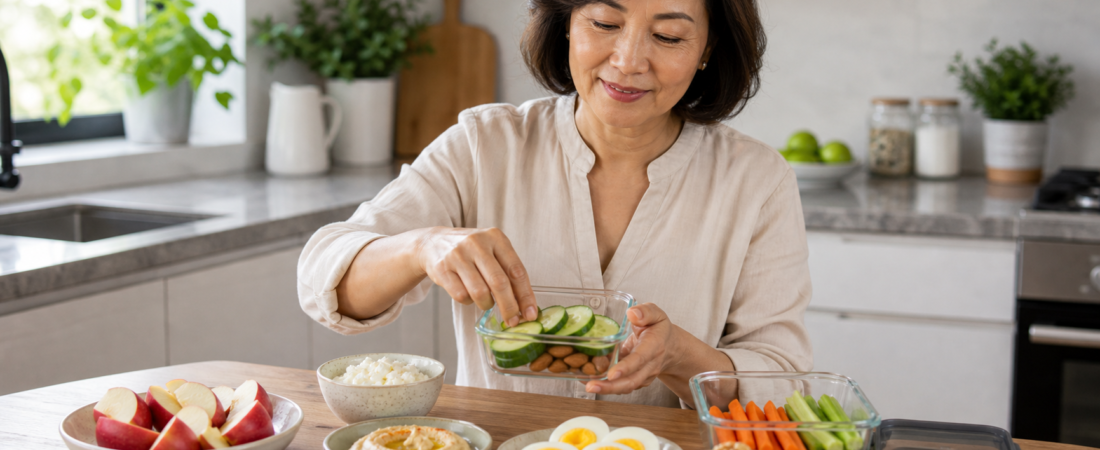
A diabetic meal plan for beginners should feel practical, not punishing. The goal is not to remove every enjoyable food. The goal is to build meals that support steadier blood sugar, better fullness, and more predictable energy. For many people, the most helpful starting point is learning how protein, fiber, carbohydrates, and meal timing work together.
The Simple Plate Method
A balanced plate can make diabetes nutrition easier. Fill half the plate with non-starchy vegetables such as salad greens, broccoli, peppers, zucchini, cucumbers, mushrooms, or green beans. Add a quarter plate of protein such as eggs, chicken, fish, tofu, Greek yogurt, beans, or lean meat. Use the final quarter for higher-fiber carbohydrates such as oats, brown rice, quinoa, lentils, berries, sweet potato, or whole-grain bread.
This method helps slow digestion and reduces the chance of a sharp blood sugar spike. It also keeps meals satisfying, which matters because overly restrictive meals often lead to cravings later.
Beginner Breakfast Ideas
Breakfast is a common place where blood sugar rises quickly because many breakfast foods are mostly refined carbohydrates. A better breakfast includes protein and fiber. Try eggs with vegetables and whole-grain toast, Greek yogurt with berries and chia seeds, oatmeal with nuts and cinnamon, or cottage cheese with fruit.
If you drink coffee, pay attention to sweetened creamers and flavored drinks. Liquid sugar can add up quickly without making you feel full.
Lunch and Dinner Examples
A blood sugar-friendly lunch could be grilled chicken over salad with beans and avocado, tuna with whole-grain crackers and vegetables, lentil soup with a side salad, or a turkey and vegetable wrap. Dinner could be salmon with roasted vegetables and quinoa, tofu stir-fry with brown rice, chili with beans and lean protein, or a chicken bowl with greens, salsa, and a small portion of rice.
Carbohydrates are not automatically bad. The type, portion, and meal combination matter. Pairing carbohydrates with protein, fiber, and healthy fats usually produces a steadier response than eating carbohydrates alone.
Best Snacks for Diabetics
Smart snacks can help when there is a long gap between meals. Good options include apple slices with peanut butter, Greek yogurt, boiled eggs, vegetables with hummus, cheese with whole-grain crackers, nuts, or berries with cottage cheese. The best snacks usually contain protein or fat plus fiber.
What to Watch Closely
Portion sizes, sweet drinks, low-fiber breads, desserts, and large restaurant meals can all affect blood sugar. Stress, poor sleep, illness, and medication timing can also change blood sugar patterns. If you monitor blood glucose, use your readings as feedback rather than judgment.
Important Safety Note
If you use insulin or blood sugar-lowering medication, do not make major diet changes without professional guidance. Eating fewer carbohydrates than usual may require medication adjustments. Work with your healthcare provider for a plan that fits your treatment.
Bottom Line
A beginner diabetic meal plan should be repeatable. Start with balanced plates, high-fiber carbohydrates, protein at each meal, and snacks that prevent extreme hunger. Small consistent choices often work better than a strict plan that is impossible to maintain.
How to Build a Day of Meals
A simple day could start with Greek yogurt, berries, chia seeds, and a few nuts. Lunch could be a chicken salad bowl with beans, vegetables, olive oil dressing, and a small portion of whole grains. Dinner could be salmon, roasted vegetables, and sweet potato. Snacks can be used when needed, especially if there is a long gap between meals.
Beginners often do better when they repeat a few reliable meals instead of trying a new recipe every day. Repetition makes grocery shopping easier and helps you notice how your body responds. Once the basics feel steady, add variety with different vegetables, proteins, herbs, and high-fiber carbohydrates.
Common Beginner Mistakes
One mistake is eating too little during the day and becoming overly hungry at night. Another is choosing foods labeled “sugar-free” without checking the rest of the nutrition label. Some products still contain refined starches or may not be filling. It also helps to avoid drinking calories unless they are part of a planned meal.
For better long-term results, focus on regular meals, hydration, fiber, and protein. Keep notes if certain meals leave you tired or hungry quickly. Those patterns can help you adjust portions and food combinations.
Build the meal around blood sugar stability
For blood sugar friendly meals and snacks, the goal is not to make every meal tiny or joyless. A more useful approach is to pair carbohydrates with protein, fiber, and fat so digestion is slower and the meal feels satisfying. Start with a protein anchor, add non-starchy vegetables, choose a measured carbohydrate if it fits your plan, and finish with a fat source such as avocado, olive oil, nuts, or seeds.
A practical plate could include vegetables, beans or berries, eggs or tofu, fish or chicken, avocado, nuts, yogurt, and measured whole grains. This style works because it gives structure without pretending every person has the same glucose response. If you monitor blood sugar, compare your own numbers after different meals. If you use glucose-lowering medication, do not make major carbohydrate changes without medical guidance.
Safety note
This content is educational. If you have diabetes, insulin resistance, are pregnant, or take medication, use your care team for personal targets and medication-safe changes.
What to avoid overdoing
More effort is not always better. With blood sugar support, people often add too many rules at once and then cannot tell what helped. Start with one change, repeat it for several days, and adjust from there. This keeps the routine flexible enough to survive work, travel, family meals, and imperfect grocery weeks.
Reader FAQ
Do I need a strict plan? Usually no. A strict plan can help for a short period, but most readers do better with a clear pattern and flexible swaps.
What is the safest first step? Start with food quality and consistency. If you use diabetes medication, keep your clinician involved before making major carbohydrate changes.
Related Check Nourish Guides
- Anti-Inflammatory Meal Prep for Busy Women: A 5-Day Lunch Plan
- High Protein Lunch Ideas for Weight Loss: Easy Work Meals for Women
- Magnesium Glycinate vs Citrate for Sleep: Which Is Better for Women?
- Best Snacks for Diabetics at Night: Blood Sugar-Friendly Choices Before Bed
- Collagen vs Whey Protein for Women: Which Supplement Fits Your Goal?
- Best Digestive Enzymes for Bloating in Women: What to Know Before Buying