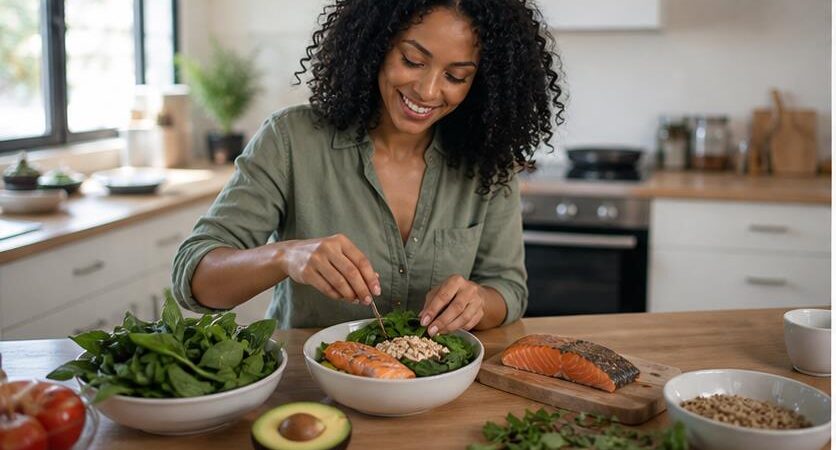
An anti inflammatory salmon lunch bowl is a practical way to bring more nutrient-dense foods into the middle of the day without making lunch complicated. The idea is simple: combine a protein source, colorful plants, fiber-rich carbohydrates, healthy fats, and a flavorful dressing. When the bowl is built well, it feels fresh, filling, and easy to repeat.
Anti-inflammatory eating is not a quick fix or a cure for health conditions. It is a pattern that emphasizes whole foods such as fish, vegetables, fruit, legumes, nuts, seeds, olive oil, herbs, and spices. If you have a medical condition or take medication, treat this as general education and personalize your diet with a professional. For everyday meal prep, though, salmon bowls are one of the easiest places to start.
Why Salmon Works
Salmon is popular in anti-inflammatory meal plans because it provides protein and omega-3 fats. It is also satisfying, which matters when lunch needs to carry you through a long afternoon. You can use fresh salmon, frozen salmon, canned salmon, or even leftover cooked salmon from dinner. The best option is the one you can realistically prepare and afford.
If salmon is not available, you can use sardines, tuna, trout, chicken, tofu, tempeh, eggs, lentils, or beans. The bowl method still works. The goal is not to make one perfect lunch. The goal is to have a flexible template that supports better choices.
The Bowl Formula
Start with greens such as spinach, arugula, romaine, kale, or mixed leaves. Add a fiber-rich base like quinoa, brown rice, lentils, chickpeas, farro, or roasted sweet potato. Add cooked salmon. Then add two or three colorful vegetables, such as cucumber, tomatoes, red cabbage, carrots, roasted peppers, broccoli, or asparagus.
Finish with healthy fats and flavor. Avocado, pumpkin seeds, walnuts, olives, or a drizzle of olive oil can make the bowl more satisfying. For dressing, use lemon juice, olive oil, Dijon mustard, garlic, herbs, black pepper, and a pinch of salt. Yogurt-based sauces with dill and lemon also work well.
Meal Prep Without Soggy Texture
The main challenge with lunch bowls is texture. If everything is mixed too early, greens can wilt and grains can absorb the dressing. Store components separately when possible. Keep the dressing in a small container. Put sturdy ingredients such as grains, roasted vegetables, and salmon at the bottom, and add delicate greens closer to serving time.
If you prep for several days, cook the salmon for the first two lunches and use canned salmon or another protein later in the week. This keeps the meals fresh and reduces food waste. You can also prep a large tray of vegetables, a pot of quinoa, and a jar of dressing, then assemble bowls in five minutes.
Flavor Variations
A Mediterranean salmon bowl can include greens, quinoa, cucumber, tomato, olives, chickpeas, feta, and lemon olive oil dressing. A sesame ginger version can include cabbage, edamame, carrots, brown rice, salmon, sesame seeds, and a ginger-lime dressing. A spicy avocado bowl can include greens, roasted sweet potato, salmon, avocado, pumpkin seeds, and a yogurt-lime sauce.
Changing the dressing is often enough to make the same ingredients feel new. Herbs and spices are especially helpful. Dill, parsley, cilantro, basil, turmeric, ginger, garlic, smoked paprika, and black pepper can all bring depth without relying on heavy sauces.
What Makes It Filling
A lunch bowl should not leave you searching for snacks an hour later. If that happens, check whether your bowl has enough protein, fiber, and fat. A bowl of greens with a tiny piece of salmon may look healthy but may not be enough. Add a real serving of protein, a fiber-rich carbohydrate, and a satisfying fat source.
For weight management, the bowl can still be calorie-aware. Use plenty of non-starchy vegetables, choose measured portions of grains and fats, and avoid turning the dressing into the largest calorie source. For active days, increase the grain or potato portion. For lighter days, increase vegetables and keep the protein steady.
Work Lunch Tips
If you bring this to work, choose containers that seal well and keep the dressing separate. Lemon-based dressings can brighten leftovers, while yogurt-based dressings make the bowl feel more creamy. If your workplace has no refrigerator, use an insulated lunch bag with an ice pack.
The best anti-inflammatory lunch is not the most complicated one. It is the one you can prepare consistently, enjoy, and adapt. A salmon lunch bowl gives you a dependable structure that can support energy, appetite control, and a more colorful diet without turning lunch into a project.
Related Check Nourish Guides
- Best Snacks for Insulin Resistance at Work: Blood Sugar Friendly Ideas
- High Protein Yogurt Bowl for Weight Loss: A Filling Breakfast Guide
- Anti-Inflammatory Meal Prep for Busy Women: A 5-Day Lunch Plan
- High Protein Lunch Ideas for Weight Loss: Easy Work Meals for Women
- Magnesium Glycinate vs Citrate for Sleep: Which Is Better for Women?
- Best Snacks for Diabetics at Night: Blood Sugar-Friendly Choices Before Bed